


Wisdom Tooth Removals - Farmington Hills, MI
Experience Safe, Efficient, and Comfortable Wisdom Teeth Extractions

The Impact of Wisdom Teeth
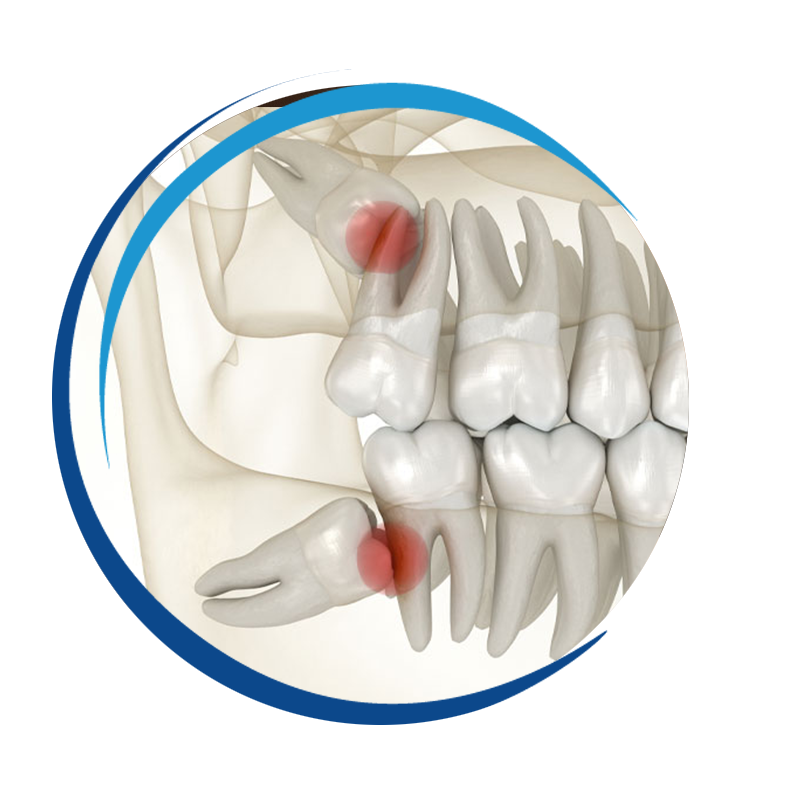
By the time most people hit their teenage years, they already have two complete sets of molars. Then, somewhere between ages 16 and 20, a third set—those notorious wisdom teeth—tries to squeeze in. Our jaws often don’t have enough real estate to accommodate them, which can cause these latecomers to push, crowd, or even damage nearby teeth, roots, and nerves.
Impacted wisdom teeth can also lead to painful infections or develop cysts that threaten your overall oral health. That’s why we closely monitor their development and often recommend removing them early, before they can stir up trouble. A proactive approach can save you pain, protect your smile, and prevent serious problems.
The Signs of Impacted Wisdom Teeth
- Swollen, red gums around the back molars
- Persistent tooth pain in the molars
- Bad breath or unpleasant taste in the mouth
- Stiffness and pain in the jaw
- Persistent, frequent, or unexplained earache or headache
- Blood or pus near your molars
- Swollen jaw or cheeks
- Difficulty biting, chewing, or opening and closing normally

What to Expect with Wisdom Teeth Extractions
Having your wisdom teeth removed is often a first-time experience with oral surgery, and that can feel a little intimidating. But rest assured, this is a common and straightforward procedure focused on carefully extracting the third molars at the back of your mouth. Here’s what you can expect when you’re in our care:
-
Consultation
In your consultation with our team, we will thoroughly examine your mouth, complemented by digital X-rays. This assessment will help us determine the position and complexity of your wisdom tooth extraction.
-
The Extraction
To access the tooth, we’ll create an incision in the gum tissue. If necessary, we may need to eliminate some surrounding bone or divide the tooth into smaller pieces for a smoother extraction process. Your wisdom teeth will be extracted with precision and care.
We often remove all four wisdom teeth in a single session to streamline the healing process. In cases where not all four need extraction, we still remove the ones that need extraction on the same day for efficient care. In some instances, we may employ a sectioning technique for better control during the procedure.
-
The Recovery
Following the extraction, you will be given time to recuperate in a dedicated recovery area. Since there will be swelling, we will provide you with an ice pack to help. Our Synergy Dental Implant Center team will thoroughly discuss post-operative instructions, guiding you to tend to the extraction site and promote healing. We will also prescribe pain medication and an antibiotic if needed. The total amount must be taken if medication is prescribed, even if you feel better.
Your Trusted Team for Surgical Extractions
Dr. Chady ElHage, Dr. Omar El-Banhawy, and Dr. Andrew Afshar bring extensive expertise in tooth extractions, including wisdom teeth removal. These procedures are part of their daily routine, so you can count on a smooth experience and a speedy recovery. Our Farmington Hills, MI, team will provide clear aftercare guidance to help you heal comfortably and avoid complications.
We also offer multiple anesthesia options tailored to your needs—from oral sedation to general anesthesia for those who prefer a more relaxed, sleep-like experience. Regarding complex extractions or dental emergencies, Dr. Afshar, our board-certified oral and maxillofacial surgeon, delivers unmatched surgical care.
Don’t leave your smile in just anyone’s hands—trust the team with the skill and experience to do it right.
Commonly Asked Questions About Wisdom Teeth Extraction
About Wisdom Teeth Removal
Wisdom teeth can erupt if you don’t have enough room for them. Wisdom teeth removal services are ideal for patients experiencing pain, worried about tooth decay, or wishing to improve the appearance of a smile compromised by wisdom teeth.
What are wisdom teeth?
A third molar wisdom tooth is the last tooth to erupt in your mouth. A wisdom tooth growing in its space generally occurs between the ages of 15 and 25. Most individuals are born with four wisdom teeth. Wisdom teeth often become impacted due to limited space. An impacted wisdom tooth or impacted wisdom teeth occurs when there is a lack of space in your jaw, and its growth and eruption are prevented by overlying gum, bone, or another tooth. Wisdom teeth symptoms include pain, swelling, infection, and deep periodontal pockets.
Wisdom teeth pain can be severe and may indicate a dental emergency requiring immediate removal. Because the area in question may be infected, wisdom teeth pain relief will occur upon the removal of the wisdom tooth or teeth causing the pain.
Is wisdom teeth removal necessary?
Certainly, the majority of people should look into wisdom teeth removal. There’s a slight chance that wisdom teeth will grow into a proper position where they can be easily cleaned. However, over 85% of people will have impacted wisdom teeth, meaning there isn’t enough room for the wisdom tooth to grow into the proper position. Impacted wisdom teeth cause irritation or infection of the gums or crowding and decay of other teeth, ultimately leading to tooth pain. Dr. Afshar is a board-certified oral and maxillofacial surgeon specializing in dental extractions, dental emergencies, dental removal, tooth extraction, wisdom tooth removal, or wisdom teeth extraction.
How will I know if my wisdom teeth need to be removed?
Some patients will experience discomfort from pressure, infection, inflammation, or irritated and deep periodontal pockets when their wisdom teeth emerge. The only way to know if your wisdom teeth need to be removed is to have an oral surgeon evaluate them by taking a Panoramic X-ray or 3D CT scan. Despite the considerable concern regarding impacted wisdom teeth, several recent studies found that third molars have broken through the tissue and erupted into the mouth in a standard, upright position. They may be just as prone to disease as those third molars that remain impacted. Not all problems related to wisdom teeth are painful or visible. Damage can occur without you being aware of it. No one can predict when wisdom teeth complications will happen, but when they do, tooth pain can be more severe and complex to treat, thus complicating teeth surgery. This is why a comprehensive consultation with Dr. Afshar, a sedation dentist specializing in wisdom teeth extraction, dental removal, and teeth surgery, is essential.
At what age should wisdom teeth removal be performed?
It is common for wisdom teeth extraction to be performed in the late teens to early twenties. The best time to have wisdom teeth removed is when the roots are ½ to ⅔ developed, and the only way to know this is with an X-ray examination. Wisdom teeth can cause problems at any age after the teenage years. However, the risk of complications or a dental emergency with teeth extraction increases the older you get. It is recommended to have a comprehensive consultation and treatment plan, including wisdom teeth removal cost and a Panoramic X-ray or 3D CT Scan.
How are wisdom teeth removed?
Wisdom tooth removal is now more comfortable than ever. Dr. Afshar can make your dental extraction experience more pleasant than ever by using IV sedation and local anesthetics. After the gums are numbed, Dr. Afshar meticulously opens them up so they can be gently pushed aside. The wisdom tooth is then exposed and extracted. Most often, the tooth is dislodged in one whole piece. Occasionally, the tooth is removed in two pieces to limit risk to the underlying nerve or because smaller pieces are easier to remove, making for a smoother dental removal. After the wisdom tooth removal, the gums are closed with sutures to help accelerate the healing process.
Is wisdom tooth extraction painful?
The teeth surgery procedure itself is mostly painless. With IV sedation dentistry, you’ll be relaxed, comfortable, and unaware of the passing of time. In addition to sedation, local anesthetics numb the mouth to anything painful. Most people experience some soreness during the healing period following surgery. At the Dental Implant Center of Royal Oak, our dream team utilizes recent advances in medicine and state-of-the-art technology to allow patients with wisdom teeth pain to undergo their dental removal in a manner that promotes rapid healing and minimal post-operative discomfort. We are one of only a handful of centers with our own 3-D CT scanner, allowing us to take 3-D imaging on patients to verify nerve positions, ensuring safety and minimal trauma.
How long is the recovery time after wisdom teeth removal?
Soreness and swelling from a dental removal may last several days. Ice packs and prescription pain medication help limit pain during healing. The sockets normally will close and fully heal in three to four weeks. As with any teeth surgery, you will likely experience pain, swelling, and bleeding. The recovery period after oral surgery can take several days; sometimes, there may still be swelling and discomfort for a week or more. Our dental experts recommend using ice packs while enjoying soft foods and keeping your mouth clean by rinsing with simple salt water. Non-woven sponges and moistened black tea bags can aid in the slowing of any bleeding. If you notice any unusual symptoms like discharge, severe pain, or a fever, call us at the Dental Implant Center of Royal Oak immediately. While complications post-dental extraction, such as an infection, are rare, they are possible.
What is wisdom teeth removal aftercare?
While your mouth recovers from tooth extraction, it is imperative not to disrupt the blood clot or irritate your healing gums. You should not consume solid foods, alcohol, coffee, soda, or hot beverages in the first few days following teeth extraction. The length of recovery depends a lot on how bad the wisdom teeth’s impaction was and how they erupted. You can do plenty of things to make the teeth removal recovery time more manageable. Plan on taking it easy for a few days; you can resume your normal activities after the first day in most cases, but for about a week, you don’t want to do anything that could dislodge the blood clot from where the wisdom teeth extraction occurred.
For the pain, the doctor can prescribe pain medicine and pain relievers. To help with the swelling, place an ice pack over the swollen surgical area. The cold helps to reduce the inflammation and ease any dental removal pain. Avoid brushing, spitting, flossing, and rinsing for 24 hours. After that, you can gently brush your teeth. Rinse your mouth with salt water frequently to help keep it clean and prevent an infection. You want to eat a soft-food diet for the first day or more and slowly move to semi-soft foods when ready. The teeth extraction recovery period can take several days; sometimes, there may still be swelling and discomfort for a week or more.
What is a Dry Socket?
Although rare, most patients describe the pain from dry socket symptoms as dull, throbbing, or sharp, stabbing pain aggravated by eating and tender to the touch. The pain usually starts about three to four days after the wisdom teeth removal and rarely goes away. After extraction, a blood clot forms in the tooth socket, the space that once held the tooth, and seals the area so that it can heal.
A dry socket occurs when the blood clot is dislodged, exposing the bone and nerves. The first five or so days after wisdom teeth removal are the most critical, and it is during this time that the risk for a dry socket is the highest. The most common cause of a dry socket is smoking or having a history of smoking within 72 hours of surgery. A dry socket can be very painful. If you think you have this condition, contact us immediately.